

User:Yug
|


Hello ! A trained sinologist I mostly lead Lingua Libre and SignIt. I gave technical support to its 300+ languages, direct support to about 60+ communities. I lead Lingua Libre advocacy in and outside Wikimedia movement, with likely over 500 people trained to Lingua Libre. I previously set up the Commons:Graphic Lab, CJK Stroke order projects, Ancient Chinese characters projects, WikiVoc, and a dozen other technical projects. When the task is too large, I occasionally freelances developments and/or community management for WMFR, WMF, and others to carry the project of the day.
-
 Wikimania 2023, Singapore.
 -
 Endangered Language Project, online, 2025.
 -
 COSCUP 2023, Taipei.
 -
 Wikimania 2025, Nairobi, Kenya.
 -
 Surui workshop 2022, Paris, France.
 -
 Whistled Occitan Hikes proposal 2025, Pau, France.
 -
 Whistled Occitan Hikes proposal 2025, Pau, France.See Commons:Lingua Libre/Dictionary.
 -
 Whistled Occitan Exhibit 2024, Anglet, France.
 -
 State of the Map France 2024, Lyon, France.


Past projects
[edit]Graphics abilities-[ Graphic Village Pump-Graphic Lab-Maps-Images ]
Atelier Graphique-[ Graphic Lab-Maps-Images ?] Animals naming convention-Commons:WikiVoc.
Bachelor degree in History - Master 1 in Chinese Studies - Master 2 of Technology, Management, and Innovation.
Sub-pages: SO SVG - /Stroke order2 - SO according to national rules - Divergeances d'ordre - Commons:CJK_stroke_order:Sources
Worked on
[edit]- Commons:Macro (+{{Macro bg}}, Image:Macro A4.svg, Image:Macro scales.svg, colors clean up), Commons:Rename, Image:Tutorial-cartography (basic).svg, Image:Chinese calligraphy scheme 04-en.svg, Image:Insect anatomy-en.svg (using my source + media:Insect_leg_scheme.svg, media:Insect_anatomy_diagram.svg, media:Cap ventral.svg), maps of China, maps of Taiwan, WikiVoc, User:Yug/MiniLab.
Gallery
[edit]/!\ Under construction /!\
[edit]-
 Draft. For futur series on Physic China.
 -
Draft. For futur series on Political divisions of China across history.

My personnal evolution on commons !
[edit]This is in ante-chronologic order :
-
.svg/330px-India_topographic_map_(2015.05.15).svg.png) Programmatically created map.
Programmatically created map. -
.svg/330px-India%2C_Andaman_and_Nicobar_locator_map_(2015.05.15).svg.png)
-
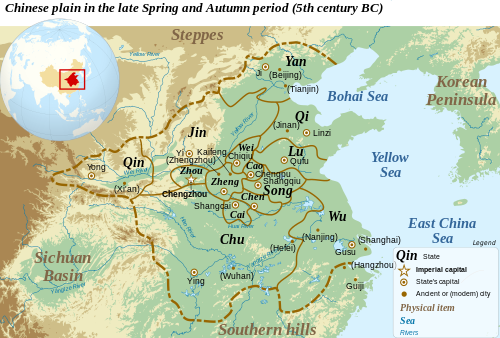 Chinese plain 5c. BC
 -

-

-
 Explain why ⼌ & 广 like radicals are wrote in 2 different ways.
 -
 CJK stroke order: Elements composition families.
 -

-
![Think again to my ex-girlfriend ? O.o (-> WikiVoc project :] )](https://upload.wikimedia.org/wikipedia/commons/thumb/b/b0/WikiVoc-axe.svg/330px-WikiVoc-axe.svg.png) Think again to my ex-girlfriend ? O.o (-> WikiVoc project :] )
Think again to my ex-girlfriend ? O.o (-> WikiVoc project :] ) -
 Test on labels stylization
 -
 Test on labels stylization
 -
 Safe position when online.
 -
 Today China's oil reserves and demand, and my articles: en:China's_energy_security (2pages) & en:China in Africa (25pages)
 -
 China in 742, png version on topo background.
 -
 SVG Chartjunk free 742 China.
 -
 China Historic macro areas
 -
 Transition from Sui to Tang family tree (clic here if there is a display bug)
 -
 not finish !!
 -

-
 en:Emperor Taizong's campaign against Xiyu states ! (clic here if there is a display bug)
 -
 1st map on Chinese History
 -
 My personal trip in Taiwan, summer 2004.
 -
 A new version of my 1918 Flu pandemic.jpg maps according to my new skills !
 -
 My fisrt animation ^-^
 -
-left_01.jpg/500px-Asilidae_member_(AU)-left_01.jpg) en:Asilidae photo (2)
en:Asilidae photo (2) -
 French wasp eating a caterpillar, near Bayonne, 2008/09.
 -
-right_02.svg/500px-Asilidae_member_(AF)-right_02.svg.png) 2008's en:Asilidae photograph, get a suitablename only recently using Animal naming conventions !
2008's en:Asilidae photograph, get a suitablename only recently using Animal naming conventions ! -
-left_01.jpg/500px-Porcellio_scaber_(AU)-left_01.jpg) Porcellio scaber
Porcellio scaber -
-left_01.png/500px-Hogna_radiata_(AF)-left_01.png) Hogna_radiata, 1st serious macros
Hogna_radiata, 1st serious macros -
-top_01.png/330px-Hogna_radiata_(AF)-top_01.png)
 Hogna_radiata, 1st serious macros
 -
 Facial Technical view (-face.png) of my camera: a « Canon PowerShot S5 IS ».
 -
 I wan't to be the next Richard Bartz !! (probably the best macro photographer of wikimedia)
 -
 Macro background.
 -
 Chinese paper, paperweight, and desk pad.
 -
 Chinese Seal and Seal paste. I'm Improving !!! ^0^y
 -
 Chinese Inkstone and Inkstick.
 -
 The 8 principles of Yong !
 -
 First CJK stroke : hēng / horizontal stroke. Part of a complete series
 -
 1st animated SVG on Commons !
 -
 Researchs...
 -
 My parents' home
 -
 My 1st serious SVG diagram !
.svg)
.svg)


![Think again to my ex-girlfriend ? O.o (-> WikiVoc project :] )](https://commons.wikimedia.org/wiki/File:WikiVoc-axe.svg)


-left_01.jpg)

-right_02.svg)
-left_01.jpg)
-left_01.png)
-top_01.png)


.svg)


My researchs on CJK characters
[edit]Set of stroke
[edit]CJK strokes set (37+4). Researchs, choices, and drawing by myself according to various Taiwanese, Chinese, Japanese and Korean sources. This study was made without looking on other similar projects, this study was made directly by a personnal analisis of traditional sources (Kangxi dictionary, Taiwan), Chinese, Japanese and Korean sources. (see below)
Differences with Unicode.org set of 36 CJK strokes: _ The G is deletable, not use by Unicode.org _ The W is not use by Unicode.org _ The BXG, WG2, and XG are merge by Unicode.org _ The HXG and HZWG are merge by Unicode.org This explain why Unicode.org have 36 CJK strokes, a why my study lead to 41 CJK strokes.
Main sources:
- http://www.kangxizidian.com/index2.php - Kangxi dictionary, need to study traditional stroke shapes and traditional number of stroke or a given character
- http://www.edu.tw/files/site_content/M0001/bishuen/c8.htm?open - Authoritative source for shape and stroke order in Taiwan, need to study Modern-days traditionnal recommandations for number of stroke and stroke shape.
- The en:Xinhua Zidian (新华字典) - for Chinese (continental) simplified Strokes and simplified Strokes' shapes.
- Some Japanese and Korean dictionaries.
But some other professional projects are to notice to compare my work with what is currently done in the field.
These other projects are :
- http://unicode.org/charts/PDF/U31C0.pdf - New set of 36 strokes, by Unicode.
- http://www.wenlin.com/cdl/cdl_strokes_2004_05_23.pdf - CDL-Wenlin's set of 38 CJK strokes. Note: CDL-Wenlin team is also working for Unicode.org
Stroke order
[edit]- See my synthesis : User:Yug/Stroke_order (not finish)
Restore traditional shape
[edit]
This 2 yellow and pink colors have at least a tiny misleading point, which disallow easy stroke-order reading/guessing.
CJK characters' shape -even in Kaishu- is highly variable, according to the writer, the stroke order use, or to the century.
Now, in this 21th century, we have some Ministry of the Education who made an hard work to set up recommendations on both shape (one official shape by character), and for stroke order.
The trouble is that this two data are sometimes conflicting on modern printed characters, when old shape -visible on the Kangxi zidian or on old stelles- is working together with the stroke order to teach a smooth obvious way to write a caracter. This is by example the cases for 广,鹿,艮,etc. : looking at the traditional shape (on the Kangxi Zidian), the way of writing (stroke order) is obvious. Looking on 2008's printed book or computer fonts, the way of writing is unclear : 2 possibilities are open to us, the false one being encouraged by the 2008's shape. This is, in my opinion, a residual mistake inherited because of mecanic printing : shape have continue to oscilate and change, without control of human hand and calligraphic brush.
I would encourage to correct this aspects. This would ask to make minor shape-change on some radicals, on Unicode.org. This will then ask all characters using these radicals to be update. An huge and slow work, alone able to take 2008's characters shapes back to their former "human-friendly" shape.


Test edit using wikiapi on GitHub. Test edit using wikiapi on GitHub. Test edit using wikiapi on GitHub.